


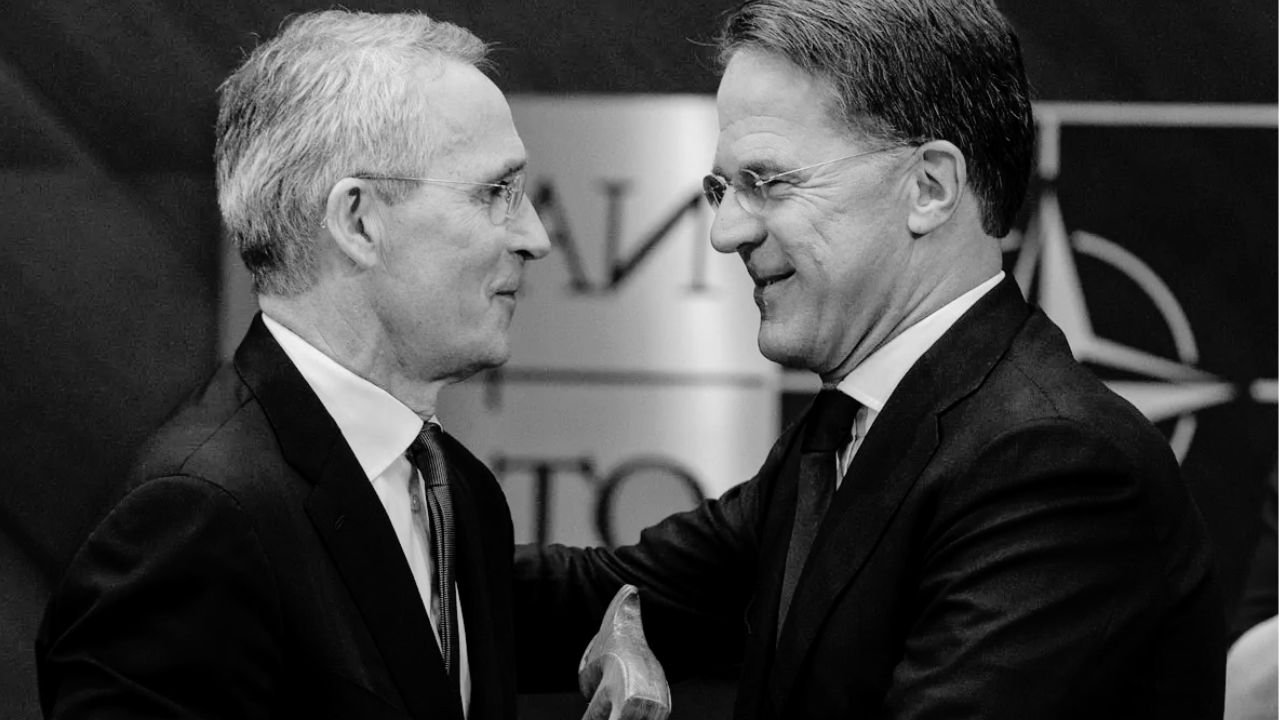
Most people who search for Izaäk Rutte arrive at his name through one person — his youngest son, Mark Rutte, who served as Prime Minister of the Netherlands and became NATO Secretary General in 2024. But Izaäk’s own life story is worth understanding on its own terms. It spans Dutch colonial commerce, wartime imprisonment, devastating personal loss, and a quiet rebuilding of family life in postwar Netherlands.
This article covers who Izaäk Rutte was, his early life and career in the Dutch East Indies, what happened to his family during World War II, his two marriages, and the blended family he raised — including his youngest child, Mark.
Who Was Izaäk Rutte?
Izaäk Rutte was a Dutch businessman and the father of Mark Rutte. He was born on 5 October 1909 in Rotterdam, Netherlands, and died on 22 April 1988 in The Hague. His parents were Isaac Johannes Rutte and Dirkje Cornelia Tekker, according to genealogical records held on FamilySearch.
He was not a political figure. Available sources describe him simply as a trader and businessman. His life became historically interesting largely because of where he lived and what he experienced — not because of any public role he held.
One small note worth mentioning for anyone researching him online: his name appears in different forms across documents and databases. You may see “Izaäk,” “Izaak,” or “Izaac” depending on the source. These all refer to the same person. The variation comes from how historical records and modern genealogy platforms handle Dutch diacritics.
His Career and Life in the Dutch East Indies
Izaäk worked as a trader and importer, and at some point he established or operated a trading company in the Dutch East Indies. This was the colonial territory governed by the Netherlands that is now the modern country of Indonesia. The two are not the same — the Dutch East Indies was a colonial system that existed before Indonesian independence in 1945.
During the early twentieth century, the Dutch East Indies was a significant center of commerce for the Netherlands. Many Dutch businessmen made careers there, and Izaäk was among them. His move to the region was not unusual for the era.
In 1931, he married Petronella Hermanna Dilling, and the couple had children while based in this part of the world. Genealogical sources list at least two daughters from this first marriage, though some broader biographical accounts refer to three children. The exact count depends on which records are consulted, and sources do not fully agree.
World War II and the Japanese Internment Camps
In 1942, Japan occupied the Dutch East Indies as part of its broader expansion during World War II. Dutch nationals living in the territory — including civilians — were interned in camps run by Japanese forces. These included labor camps and prison camps, and conditions in many of them were extremely harsh.
Izaäk was imprisoned in a Japanese-run labor camp during the occupation. He survived. His first wife, Petronella Hermanna Dilling, did not. She died in the wartime camp system in 1945.
It is worth knowing that the Japanese internment system typically separated men and women into different facilities. This means Izaäk and Petronella would almost certainly have been held apart from each other throughout the occupation. The loss of his wife while they were in separate camps, unable to help one another, was part of the broader tragedy that affected thousands of Dutch colonial families during this period.
The historical record on Izaäk’s specific wartime experience is limited. What is confirmed — that he survived imprisonment and that Petronella died in the camp system — comes from biographical sources including Britannica’s profile of Mark Rutte. Additional personal details are not reliably documented, so this account stays close to what those sources support.
His Second Marriage and the Family He Built After the War
After the war ended and Izaäk returned to the Netherlands, he remarried. His second wife was Hermina Cornelia Dilling, known to the family as Mieke. She was the sister of his deceased first wife, Petronella.
This kind of arrangement — marrying a deceased spouse’s sibling — was not entirely uncommon in historical contexts, particularly in the aftermath of wartime loss. It should be understood as a practical and emotional response to grief and shared circumstance, not as anything scandalous. Both Izaäk and Mieke had lived through an extraordinarily difficult period, and they had the bond of knowing the same person they had both lost.
The marriage is recorded around 1946. Together, Izaäk and Hermina had four children. Combined with the children from Izaäk’s first marriage, the household became a blended family of seven children in total.
Mark Rutte was the youngest of those seven. He was born in 1967 in The Hague, making him notably younger than several of his older siblings. The large age spread within the family reflects the fact that Izaäk’s oldest children came from a marriage that had begun in 1931, more than three decades before Mark was born.
Understanding the Family Structure
Because Izaäk had children from two marriages — to sisters, no less — the Rutte family structure can look a little complicated when you first encounter it in genealogy records or biographical summaries.
Some profiles describe Mark Rutte as having six siblings. Others focus only on the children from Izaäk’s second marriage. If you are researching the family tree and the numbers seem inconsistent, that is why. The children from the first marriage and the children from the second marriage all belonged to the same household, but they are sometimes recorded separately in genealogical databases.
For readers interested in how family histories like this get documented, resources like SmallBusinessGoal occasionally cover practical research topics that touch on record-keeping and tracing family or business histories across different eras and regions.
The key takeaway is this: Mark Rutte grew up as the youngest child in a blended family headed by Izaäk and his second wife Mieke. The older siblings were children Izaäk had with Petronella before the war.
Izaäk Rutte’s Later Life and Death
After the war, Izaäk and his family settled in the Netherlands. He died on 22 April 1988 in The Hague, the same city where Mark Rutte was born and where Mark would later build his political career.
Izaäk did not live to see his son become Prime Minister — Mark Rutte first took that office in 2010, more than twenty years after his father’s death. There is no documented public record of Izaäk’s views on politics or of any direct influence he had on Mark Rutte’s career path. Drawing that connection would be speculation.
What can be said is that the life Izaäk lived — working in a colonial territory, surviving wartime imprisonment, losing his first wife, and rebuilding a family — shaped the household that Mark Rutte grew up in. That context is part of who Mark Rutte is, even if Izaäk himself was never a public figure.
A Note on Sources and Reliability
Public information about Izaäk Rutte is genuinely limited. The most reliable details come from two types of sources: genealogical records, which provide dates, names, and marriage records; and biographical profiles of Mark Rutte, which provide broader family context.
Neither type is complete on its own. Genealogy databases like FamilySearch and Genealogy Online are useful for dates and names, but they are compiled records and may have gaps. Biographical sources like Britannica offer context but are focused on Mark Rutte, not on Izaäk himself.
Readers who encounter conflicting details — particularly about the number of children or the exact spelling of names — should not be surprised. These inconsistencies reflect the limits of available documentation, not errors in the core story.
Conclusion
Izaäk Rutte was a Rotterdam-born businessman who built a life in the Dutch East Indies, survived one of the most brutal chapters of World War II, lost his first wife in the Japanese internment camp system, and returned home to marry again and raise a family of seven children.
He was not famous in his own right. But the life he lived — shaped by colonial commerce, wartime survival, and postwar resilience — forms the background against which Mark Rutte, one of the most prominent European politicians of the early twenty-first century, grew up.
For anyone researching the Rutte family, Izaäk’s story is worth knowing not because it explains Mark Rutte’s politics, but because it offers a clear picture of where he came from and what his family carried before he was ever born.
Also Read:
